Trying to Find the Truth in the Latest LA Times, NY Times CA High-Speed Rail Pieces

Earlier this week, both the New York Times and the L.A. Times published articles on California high-speed rail.
The NYT tells the overall story in an informative and fairly balanced way. The L.A. Times continues its long history of misleading high-speed rail articles by Ralph Vartabedian.
For Vartabedian’s latest piece, ‘Calculations show bullet train can complete the route within 2 hours and 40 minutes. Reality may prove slower,’ the newspaper used the public records act to request raw data on scheduling simulations from the California High Speed Rail Authority (CAHSRA). These simulations show that CAHSRA has designed its system to complete a two-hour, 40-minute trip between L.A. and San Francisco, which is the trip length approved by voters in 2008.
Hmm… Agency promises schedule. Voters approve. Computer simulations show that the designs meet the promised schedule. Shouldn’t this story be about a government agency making good on a pledge?
Well, not if it’s the L.A. Times reporting on high-speed rail.
There’s a rail vs. cars double standard here. Delivering on pledges is something that California’s freeway-builders routinely fail to do. Caltrans, using discredited Level of Service predictions, repeatedly boasts that its multi-billion dollar freeway widening projects reduce congestion and improve air quality. The Times gives rail projects hell for cost overruns and performance predictions. Freeway expansion projects apparently don’t merit anywhere near the same scrutiny from the Times.
Vartabedian, using a playbook common among lazy, biased transit journalists, quotes rail critics such as Robert Poole, a transportation “expert” at the Reason Foundation–which is a ‘think tank’ (that is, a lobby group) funded by the Koch Brothers and ExxonMobil, among others.
Vartabedian cites a 2015 report from the Spanish firm Sacyr Concesiones S.L., which, he says, states that “220 mph is higher than most if not all standard commercial speed for HSR, since it goes beyond the operating speed of similar HSR currently operating anywhere in the world.” He goes on to write that:
Many transportation experts, including state staff and independent analysts, have long dismissed the probability that any operational California bullet train will meet the two-hour-40-minute timetable. A state-appointed peer review panel warned the legislature in 2013 that “it is unlikely that trains would actually be scheduled to run during normal hours of operation within … 2 hours 40 minute limits.”
Let’s clear a few things up.
On page 11 of Proposition 1A, which voters approved in 2008 and the legislature affirmed in 2012, this statement appears: “maximum nonstop service travel times for each corridor. . . shall not exceed the following: (1) San Francisco-Los Angeles Union Station: two hours, 40 minutes.”
Key there is “maximum nonstop service travel times.”
So, yes, it’s likely that few trains will make it in two hours and 40 minutes. The CAHSRA would probably operate one peak morning train and one peak evening train to get business travelers between S.F. and L.A. in time for morning meetings and then home again for dinner. That’s the letter and the intent of the voter-approved Prop. 1A.
But most other trains would make intermediate stops, say in Burbank, Fresno, and San Jose, and a few local trains would stop at smaller stations as well. Those runs would take closer to three hours from L.A. to S.F.–still very competitive with air travel, when one factors in the trip to the airport, delays on the tarmac, etc. Train systems in Asia and Europe that have similar run times have taken huge market share from airports. This is how they operate.
Vartabedian goes on to write that:
The Japanese Shinkansen, the inspiration for all of the world’s high speed trains, operates between Tokyo and Osaka, a distance of 344 miles. The fastest trip takes two hours and 22 minutes, yielding an average speed of 145 miles per hour, according to Japanese Railway schedules. The French Train à Grande Vitesse, or TGV, operates the Paris to Lyon line over 243 miles and takes one hour and 59 minutes, according to TGV schedules. The average speed is 121 miles per hour.
But the Los Angeles to San Francisco route, which would traverse three mountain ranges and five of the 10 largest cities in the state, is supposed to travel 438 miles in 2 hours and 40 minutes — requiring an average speed of 164 miles per hour.
These numbers are valid, but let’s get a little perspective.
The Tokyo-Osaka Shinkansen, although it has since been upgraded, was originally built in the 1960s. The French TGV line that Vartabedian has chosen to highlight was designed and built in the late 1970s/early 1980s.
Why not look at a newer line? Such as, say, the Chinese Beijing–Shanghai high-speed railway, which runs at 220 mph (speeds were lowered temporarily but resumed this top speed last year). The French TGV, in tests, has reached a whopping 357 mph. That still holds the record, set in 2007, for a train on steel rails. Many other rail manufacturers have greatly exceeded the speeds referenced by the L.A. Times.

That said, there is a trade-off between how fast a train can go and how much it will cost in electricity and track wear.
In order to make higher speeds more economically feasible, rail manufacturers are constantly improving their equipment to reduce weight and power consumption. Off-the-shelf trains already exist that can fulfill that 220 mph speed requirement within the economical threshold of power consumption and weight. China has them, as noted above. There’s also the French Automotrice à grande vitesse, (AGV), which can cruise at 220 mph while consuming the same or less power than France’s current fleet. Manufacturers in other countries also have trains in operation that should be able to handle California’s mandate.
Vartabedian also writes that CAHSRA will depend on “human train operators consistently performing with the precision of a computer model.” Well, that’s already done around the world, since high-speed rail trains are basically controlled by computers–the train driver is in the system to make sure nothing goes wrong. In fact, there’s a famous case of a Japanese Shinkansen driver who fell asleep, and the train continued along at 170 mph, eventually pulling itself into the next scheduled station without incident.
There is no doubt that the first train to use California’s high-speed track spine in the Central Valley will not fulfill the speed requirements right out of the gate. Opponents of the project seem unaware–or deliberately obfuscate–that high-speed trains can (and do) slow down and use existing tracks.
If there’s a criticism to be made of the CAHSRA, it’s that it has not yet spelled out plans for intermediate services that could run while Californians wait for the full build-out of the system. For example, there are tracks–currently used by Amtrak–connecting Oakland to the northern end of CAHSRA’s 119-mile Central Valley spine. High-speed trains could use those tracks–towed by conventional diesel locomotive for part of the trip–to offer a much-improved Amtrak service.
That type of stepped approach is how high-speed rail was built in many places.
One example is the Eurostar train between Paris, Brussels, and London. From 1994 to 2007, this high-speed train went around 186 mph from Paris to the Channel Coast. When it popped up on the British side, it slowed to 90 mph or slower, and shared tracks with commuter trains–much as CAHSRA plans to do with shared Bay Area Caltrain service–because the UK originally didn’t want to spend the money to build a dedicated high-speed line to the coast. Specially designed trains could run on both France’s dedicated high-speed lines, which have overhead lines for power, and the UK’s third-rail-powered tracks. The total trip from London to Paris with this ‘blended approach’ took around three hours. Over time, more high-speed segments were built and train speeds increased. The Eurostar now takes about two hours and 20 minutes to do the same trip. And the newest trains go 200 mph. There’s also the Sables d’Olonne service in France, which uses a TGV towed by a diesel locomotive to provide a one-seat ride from Paris, traveling at high speed for part of the trip, and then at low, Amtrak-like speeds on other portions.
Vartabedian concludes with a Reason Foundation quote asserting that Florida’s future Brightline higher-speed rail would be a better, cheaper model. Brightline opened in January, expanded in May, and is operating successfully. It’s not news that building a ~100 mph facility is cheaper than a 220 mph one. The comparison is apples to oranges–or perhaps house-cats to cheetahs. Basically, Brightline is running at similar speeds to some of today’s Amtrak lines–albeit with more up-to-date trains both inside and out.
But the difference is true high-speed trains are transformative–on most corridors in Europe and Asia, airplanes are now the discount, low-ball way to travel, because high-speed rail has taken over the business market almost entirely. Perhaps that’s why an oil-backed group such as Reason is willing to throw a bone to Brightline–it’s nice, but it’s no threat to the dominance of petroleum-dependent, heavily subsidized transportation (mainly cars and airplanes).
Back to this week’s other HSR article, the New York Times ‘A $100 Billion Train: The Future of California or a Boondoggle? ‘ by Adam Nagourney.
If you only read one high-speed rail article this week, we recommend the piece in the NYT, which paints a much more balanced picture of a project that has faced a lot of adversity, but is getting built anyway.
Nagourney’s recap of the project’s tortured finances is an important recap for readers not steeped in the intricacies of CA high-speed rail funding. In 2008, voters approved $10 billion as a down payment on the rail system, under the assumption that, as with highway projects, the federal government would be an investment partner in this key transportation infrastructure. From the NYT:
The cost was originally supposed to be split among the state, the federal government and private business. But that arrangement faltered, as hopes for federal dollars faded with Republicans in power in Washington, and businesses shied away from such an uncertain venture. As of now, the rail authority has come up with less than $30 billion…
Nagourney’s piece includes plenty of project criticism. He quotes former Fresno mayor, now state assemblymember Jim Patterson, as saying “This is going to be the most expensive and slowest form of fast rail imaginable.” This is just hyperbole from someone who has always opposed the project. There’s no way that California’s high-speed rail will be the “slowest” anything.
But, in contrast with the L.A. Times, the N.Y. Times at least attempts to find a balance. Nagourney ends the piece on an optimistic note, quoting Karen Philbrick, executive director of the Mineta Transportation Institute:
Approximately two dozen other countries have found HSR feasible, including Uzbekistan… there is no reason it can’t be done here.


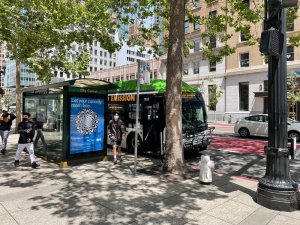
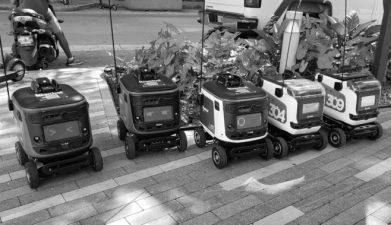
The last-mile problem? How is that any different than how you get where you’re going from the airport?
Rent a car.
Take a taxi.
Uber.
BIRD.
Bike share.
Walk.
Of course those last few options aren’t viable from the airport, but they are for HSR because the stations are located downtown.
Wouldn’t that also be air travel’s weakness too? Yet every day thousands of people are somehow able to fly between SF and LA. Hint #1: rental cars. Hint #2: check out the transit options available at SF Transbay, downtown SJ, and LA Union.
You’re a total nutter with a serious case of OCD. Get help, man.
Dude, that’s because MOST travel is within ten miles of the origin. This is MEANINGLESS statistic.
Yes, I know that Mayor Swearengin was a big supporter during her time as mayor of Fresno. But unfortunately, even their own State Representatives like Asm. Patterson continue to spew nonsense against it as they very clearly drive by active construction sites.
High speed rails biggest weakness, is the final leg of the journey, your
destination, once you’re at the station, where do you go from there and
how do you get there?
The emphasis behind California HSR was that
the public transit systems in the metros would serve the people that
took HSR to get there to begin with, car free. That reality hasn’t
happened, BART in San Francisco is falling apart, they’ll need tens of
billions to refurbish it, raising property taxes in order to do it. Los
Angeles is building light rail to the tune of billions at the expense of
cheap buses, not taking cars off the road. The fact is, California’s
supposed car free future will cost state and federal taxpayers close to
400 billion dollars by 2040’s and close to a trillion in lifecycle costs
and WHY especially when in the not too distant future higher speed
buses, smart highways or driverless automobiles will already be in
service at a vastly lower price tag.
Why not. Americans drove more than 3 trillion miles in 2015, so the subsidy per vehicle mile was about a penny. For comparison, transit subsidies averaged about 86 cents per passenger mile. I’m in favor of ending subsidies to both transit and driving. How about you? The difference is if driving subsidies expired the driver get’s dinged a penny a mile extra, if transit subsidies expired the industry would collapse. We pay for our highways and roads with user fees and fair property taxes. Transit has to pay for itself only partially with fares and the rest comes from a multitude of sources, including pilfering driver user fees.
Like Moore’s law for computing or Murphy’s law for failure, Transportation should follow three basic laws.
1: UC professor Charles Lave insisted on observing the “Law of Large Proportions.” Investing $1 Billion on the option used by 95% of the people (Roads for driving alone, carpool, vans, buses, motorcycles, trucks, etc) will produce far more benefits than investing the same $1 Billion on the option used by less than 2.0% of the people (Rail).
2: Law of preexisting infrastructure: ”In an area that already has transportation infrastructure, any transportation technology that requires new infrastructure to be built is doomed to fail because it will be unable to compete against technologies using existing infrastructure”. It costs between 5-10 million dollars per mile to build a highway lane, Everything else costs over 50 to 100 million per mile.
3: Transportation efficiency isn’t always a matter of speed, convenience is also important and based on destination…. Station to station transportation technology can never hope to compete against a transportation technology that can offer door to door service.
Transit oriented development, fancy way of saying being forced to live in an apartment if you want a house. Trains are not setting ridership records, except in vacancies.
Transit ridership in the US is steadily declining and that’s data from the American Public Transit association and Dept of Transportation.
Reduced service is an important factor in declining ridership. But what the transit advocates haven’t admitted is that this is mainly a problem in cities with expensive rail transit: the cost of building and maintaining rail systems often forces agencies to cut back on bus service. Deteriorating service in regions with older rail systems — New York, Chicago, Washington, Philadelphia, Boston, and San Francisco-Oakland — has cost those systems ridership. Decisions to cut bus service in order to build rail in Los Angeles and many other urban areas has cost riders in those areas. The one thing almost all urban areas have in common, however, is the
growth of ride-hailing services such as Uber and Lyft. Those ride-hailing services aren’t going to go away; in fact, their advantage over transit will be multiplied many times as they substitute driverless cars. Cars will become more fuel efficient over time or simply electrify. Also GHG emissions, California has already met it’s current reduction goals, despite being a major oil and gas exporter. Americans drove more than 3 trillion miles in 2015, so the subsidy per vehicle mile was about a penny. For comparison, transit subsidies averaged about 86 cents per passenger mile. I’m in favor of ending subsidies to both transit and driving. How about you? The difference is if driving subsidies expired the driver get’s dinged a penny a mile extra, if transit subsidies expired the industry would collapse.
Thomas Sowell stated, “It is hard to imagine a more stupid or more dangerous way of making decisions than by putting those decisions in the hands of people who pay no price for being wrong.” Since HSR is being pushed by politicians on the taxpayers dime they’ll be long out of
office by the time the consequences of this boondoggle manifest themselves. Government is seldom chastised for poor decision making, let alone held accountable.
Venture capital firms are willing to spend their own money on various transportation tech, they’re free to do so. When California HSR was started, it stated it would attract private investors; so far it has attracted NONE, except the people who build the trains. No one can predict the future, but it’s safe to say visionaries can predict trends. High speed electric buses (once a joke via the Onion) are now, real prototypes. High speed rails biggest weakness, is the final leg of the journey, your destination, once you’re at the station, where do you go from there and how do you get there?
The emphasis behind California HSR was that the public transit systems in the metros would serve the people that took HSR to get there to begin with, car free. That reality hasn’t happened, BART in San Francisco is falling apart, they’ll need tens of billions to refurbish it, raising property taxes in order to do it. Los Angeles is building light rail to the tune of billions at the expense of cheap buses, not taking cars off the road. The fact is, California’s supposed car free future will cost state and federal taxpayers close to 400 billion dollars by 2040’s and close to a trillion in lifecycle costs and WHY especially when in the not too distant future higher speed buses, smart highways or driverless automobiles will already be in service at a vastly lower price tag.
Interesting articles, thank you! I know there’s a hard limit at Mach 0.5 for wheeled trains, but I never knew about the wire/pantograph limits.
There are plenty of local officials in the Central Valley who are strongly for HSR. Take, for example, the outspoken mayor of Merced. It’s really only the national wackos who say they are against it.
Obviously, people in the modern era haven’t gotten the memo about trains being obsolete as numerous lines around the country both long and short continue to set ridership records and others seek to be restored.
1. Expanding road capacity increases environmental impacts and GHG emissions, both of which the State of California has expressly determined to do the exact opposite with.
2. That might be a valid point if we’re talking about building a new freeway parallel an existing one, but HSR absolutely can compete with the technologies that would use the road system because none would have the ability to travel at the speeds that HSR will.
3. Perhaps you’ve heard of TOD? There are also numerous initiatives to provide first-mile/last-mile connections and the fact that Uber/Lyft are popular options for traveling to/from transit stations (versus just finishing the entire trip) really dispels that myth.
The railroads were HEAVILY regulated up through the 1960s and since they paid taxes on property and profits, they were literally funding the ascendance of their competition as tax dollars flowed into road construction projects. As such, it’s not really a meaningful point to even bring up.
That portion is also already getting upgraded as part of the Valley Rail proposal that won partial funding earlier this year, though I’m not completely sure if it’ll actually be any faster.
http://www.acerail.com/About/News/2017/Valley-Rail-Project-Receives-Major-Grant-Funding-T
Mostly because Central Valley politicians continue to rail against it instead of going to their constituents and helping them figure out how it can and will work for them. Starting with jobs in the present.
But no one is saying that light rail should be deployed throughout the entirety of the SCAG region, which for starters spans the entire width of the state to the borders with AZ, NV, and Mexico and includes far-flung towns like Blythe, Needles, and Calexico. At the same time, transportation agencies continue to dump billions into widening freeways that absolutely could have a better impact on mobility if it were instead put into light rail.
Also, most of the rail in the SCAG region at present is all focused on downtown LA and traveling between locations outside of downtown frequently means still having to go there to transfer. The Measure M expenditure plan to build more north-south connections will go FAR toward really boosting ridership by providing true options for travelers to get somewhere quickly instead of having to travel 15 miles to go three like the present system can easily require.
You’re the optimist. Experience has led me to be more skeptical. Politics isn’t a calm path, and HSR does not have anywhere near the support to carry it onward through future challenges.
You’re exactly correct about the trip length markets where HSR is trying to compete (50-500 miles). And while it is also true that these trips only account for a small portion of total trips in California (approximately one percent), it’s much more important to note that they account for a significant share of VMT (15-20 percent), because the trips are so much longer.
Or worse yet, Gilroy to Hanford. Those intermediate markets are precisely where HSR will actually provide the biggest benefit, even though the LA-SF trip is the shiny toy being dangled ahead of supporters.
I mean, the CAHSR project isn’t exactly happening in a vacuum. The existing parallel Amtrak service already sets ridership records, so it sounds quite unlikely that faster trains with more frequent service won’t provide even more use.
The plan for the blended corridor is still to operate at 110 MPH (both for HSR trains and at least some Caltrain service) which obviously isn’t 220 MPH, but is still faster than at present.
It’s not CAHSR’s fault that SF can’t figure out how to get to Transbay Center, but they’re obviously a partner in the endeavor and continue to assist in working on it.
SB 32 secured cap-and-trade through 2030 and the defeat of Prop. 70 in June means that the appropriation process will not need a 2/3 majority to pass in 2024. By then, the Central Valley spine should be seeing operation from Amtrak, which in conjunction with the Valley Rail project will provide a vast improvement in rider experience through the heart of the state, to say nothing of the thousands of jobs that have been created by planning and construction.
Voting on it again certainly is a possibility, but ending it would definitely not save money as the State would have to repay the Feds, would still be on the hook for the bonds already issued, and would of course get hit by billions in lawsuits.
The governors don’t need to be absolute cheerleaders because Gov. Brown already did the hard part: lining up funding. They just need to not impede the progress.
Frank Smith PE
Richard you are correct. Current technology is capable of sustained speeds of 250 mph or even 300 mph. This could make the LA to SF express run in UNDER 2 Hrs.
Currently there is an apparent technical limit of 220 MPH.In actual practice the worlds railroads limit their maximum speed to 186 MPH.
This limit can be bypassed with relatively minor changes to the Overhead Contact Wire and the Pantograph. These changes and their possible impact on the CHSR project are described in mt blog http://www.macro.com/news-and-blog/
The ASME and IEEE are publishing my paper delving into the technical details of the proposed changes.
Gilroy to Bay Area perhaps, but to SF transit center? Nope.
AB/SB32 funds are not secure in the future, cap&trade funds are legally uncertain and nebulous.
Yes. They’ll need the billions they have, and tens of billions more they don’t have. The possibility of HSR returning to the voters exists, and that would not be positive outcome.
The next couple governors will not be supportive as Brown was, in his quest for legacy. Forecast is not good.
You can’t make a HSR system cost effective “incrementally”. By definition, HSR is serving long distance travel, so the trains have to go long distances. Duh!
The goal of HSR is to get the travel times for long distance trips down to less than 3 hours, so they can compete with air travel times. This is possible for trips under 400 miles if you make the train fast enough. There’s no way any of the auto and bus options, including automated vehicles, will ever be able to compete, on the basis of time, for the long distance markets.
Thanks for looking up those air fares for me. Now why don’t you look up the fares for Megabus. They’re not $1 from LA to SF, they’re $10-15. And somehow they manage to average 55 MPH on I-5 “one of the most congested roads in the state” (give me a break). I’ve ridden Megabus a few times, but only when air fares were in the $150-200 range and I could afford to waste the extra 4 hours on the trip.
By the way, when are you going to pull out the big guns and try to convince me that we should wait for hyperloop instead of HSR?
The introduction of a high speed train connection invariably accompanies the elimination of a slightly slower, but much more affordable, alternative route, forcing passengers to use the new and more expensive product, or abandon the train altogether. As a result, business people switch from full-service planes to high speed trains, while the majority of Europeans are pushed into cars, coaches and low-cost airplanes.
A look at European railway history shows that the choice for the elite high speed train is far from necessary. Earlier efforts to organize speedy international rail services in Europe accompanied affordable prices and different ways to increase the speed and comfort of a rail trip. Quite a few of these services were even faster than today’s high speed trains.
It’s only “imploding” for those who don’t bother to keep up with what is ACTUALLY happening. The State has barely started to touch the bonds, still has billions from Congressional appropriations from several years back, and gets a steady flow of revenue from AB/SB 32, so the money absolutely exists to finish at least the segment under construction as well as the potential segment from SF to Gilroy. What will happen after that is certainly a good question, but just having those two segments complete absolutely will boost ridership on two lines that are already experiencing continued growth and adding service.
Only after you spend 100 billion dollars………of course. Short-distance travel (2-10 miles) trains were made obsolete by buses in the 1920s. Long-distance (500+ miles) trains were made obsolete by planes in the 1960s. Intermediate distance (50-500 miles) travel is what the HSR and rail transit community is pining for….but a host of private providers namely buses and coaches which cater to virtually every income bracket already offers that. When other transportation technologies, such as horseback riding, steamboats, and canals went obsolete, we let them go except for tourism, private recreation and museums. Why can’t we let go of the passenger train? At the time, America was suffering an inferiority complex in the early 1960s. We were losing the space race; some thought there was a missile gap with Russia; Japanese electronics were beginning to take over American markets. When Japan introduced its bullet trains in 1964, suddenly there was one more area in which our technology appeared to be inferior. Never mind that our jet airplanes were several times faster than Japan’s trains; Congress began funding passenger trains in 1965, and once a federal program starts, it generates special interest groups dedicated to keeping it going forever. Mind you only passenger trains are obsolete. Freight trains are extremely productive, and America has the finest, most advanced rail system in the world. That’s because it is mostly privately owned rail, freight rail companies and operates to produce profits, not to give politicians ribbon-cutting opportunities. The Northeast, and the NY area in particular and a few…urban areas are the only place where rail transit makes any sense. Outside that it’s a waste of money. For 100 Billion you could get high speed rail in California and it wont be fully completed until 2040…. Ample timeframe for proliferated bus companies and automated cars to steal away all of their customers even if it’s a longer ride, it will be cheaper versus high speed rail which will cost 100 Billion just to get off the ground and half a trillion over it’s life expectancy just to maintain.
Initial operating segment (IOS) I thought was originally described as comprising the section between the Central Valley and Sylmar in the San Fernando Valley.
My main point is that if the project is to move beyond the 119-mile portion connecting Shafter and Madera (there is currently only enough funding to build this portion, estimated at $10.6 billion of a total $12.2 billion allocated and/or committed) having a “higher-speed” train system using dedicated double track (no passing sidings with no interference from passenger and/or freight trains), grade-separated right-of-way (no interference from cross traffic at crossings), FRA Class 6 (or a higher rating of) track, once riders experience this higher quality of service, there is every reason to expect that this initial service offering and level of service will build support for the building of more miles of high-speed-rail track (beyond the first 119 miles).
The problem with an alignment from the Bay Area to Fresno is that it’s way too vulnerable to even more extreme cost escalation and isn’t really usable by Amtrak, which is a requirement of the ARRA money that California received for the project. Plus it’s not as politically savvy as the current construction which will provide a ~120 mile stretch where Amtrak can use it at full equipment speed of at least 110 MPH. That in itself will be a huge boon to the Amtrak San Joaquins and maybe even ACE since it could potentially extend south from Merced over the alignment as well.
I’ve driven in Europe. People aren’t taking HSR to go to work or run local errands. Hence driving.
Look up a flight between Fresno and SFO then get back to us on those prices
Because maybe people will use it? There is a small stadium in NYC that has concerts during the summer and I’ve seen people take the Amtrak from DC to see shows here. Most of the Acela customers are business.
Same here. Rich people will opt for the train instead of driving and sitting in traffic.
Still down from the 2011 estimate, what a bargain! Of course, part of the problem is that costs swelled due to delays, which were in turn at least partly due to lawsuits filed against the project pretty much since it passed.
They also stated that they could decline to ~$63bn. I agree about the potential for cost overruns to continue to be a plague on the project, but Elon has promised to lower the price of tunneling, so maybe he’ll bid and show us all what he managed to accomplish.
I was just in Fresno yesterday, the ongoing construction is evident and hard to miss. The Authority also provides a monthly recap of progress, a Business Plan every two years, and a report to the Legislature every other two years, all of which can be accessed on http://www.buildhsr.com but which I also definitely will not be wading through the entirety of.
You really are lazy. Your statistics about the overall mode share in France are virtually meaningless because they include trips of all distances. HSR is only intended to serve long-distance trips, i.e. trips longer than 50 miles. These long distance trips only account for ~one percent of all trips in any region, but they account for ~20 percent of all VMT (technically PMT: Person Miles Traveled). Since HSR can impact the mode share of only one percent of the travel market, the maximum impact on the national mode share is obviously one percent.
If you limit your statistical analysis to the long distance markets, you’ll find that the auto mode share is much smaller than 85 percent. Even in California, where HSR isn’t available, the auto share for trips between the LA and SF regions is ~70 percent and the air share is ~30 percent (bus and rail combine for ~1-2 percent). When you add HSR to the available modes it will compete with all of the existing modes.
So the Northeast is the only one that occupies capacity…………..Why build HSR in California?
The CHSR business plan estimated costs of $77 billion, but stated they could rise to as much as $98 billion. Given the cost overruns to date, I’m estimating costs of $120 – $140 billion once the dust settles.
See my earlier comment about cost overruns. For your convenience, see the chart below. I also might add delays. Completion date was originally set for 2020 it’s is currently 2033. And they haven’t even started tunneling yet.
No telling what they will find or how that will add to the cost overruns and delays:
https://uploads.disquscdn.com/images/c2c4bb6cc69329e299d7a77944a06c267384b784af7294fd230204fcefa7bebc.jpg
“Any technology that can pick you up from exactly where you are and take you exactly where you need to go is clearly superior.”
Clearly. Of course. Easy to see this is clearly superior:
https://uploads.disquscdn.com/images/8c5da2745844409cf5b57cf87cabc143a4524d8e328042b1fd9455bd4c3e5c6c.png
Recalculate
That was an opportunity to back your statement up with facts and you went for no it is not.
LazyReader covered this point: “Except for a few major urban areas…”
The Amtrak northeast corridor trains are almost always packed close to full
I’d take it over driving. If my destination was close to the station I’d take the train even if it’s longer than driving. 3 hours relaxing in a seat vs 3 hours stuck in traffic is a no brainer
The Authority is already planning to be able to offer intermediate service vis-a-vis some operator (eg. Amtrak, or DB a la Brightline).
This was always their plan, and why the CV segments are being built first: I mean, it’s called the Initial-Operating Segment (IOS) for crying out loud!
They also rounded up the cost-estimate by like +20% (it’s currently YoE $77billion, dependant upon finance scheduling, not $100billion).
So true! This article in Streetsblog is so off the mark that I question the SF editor’s intellect and judgment or his commitment to reading what he’s writing about.